



DeLorean in Coventry, UK
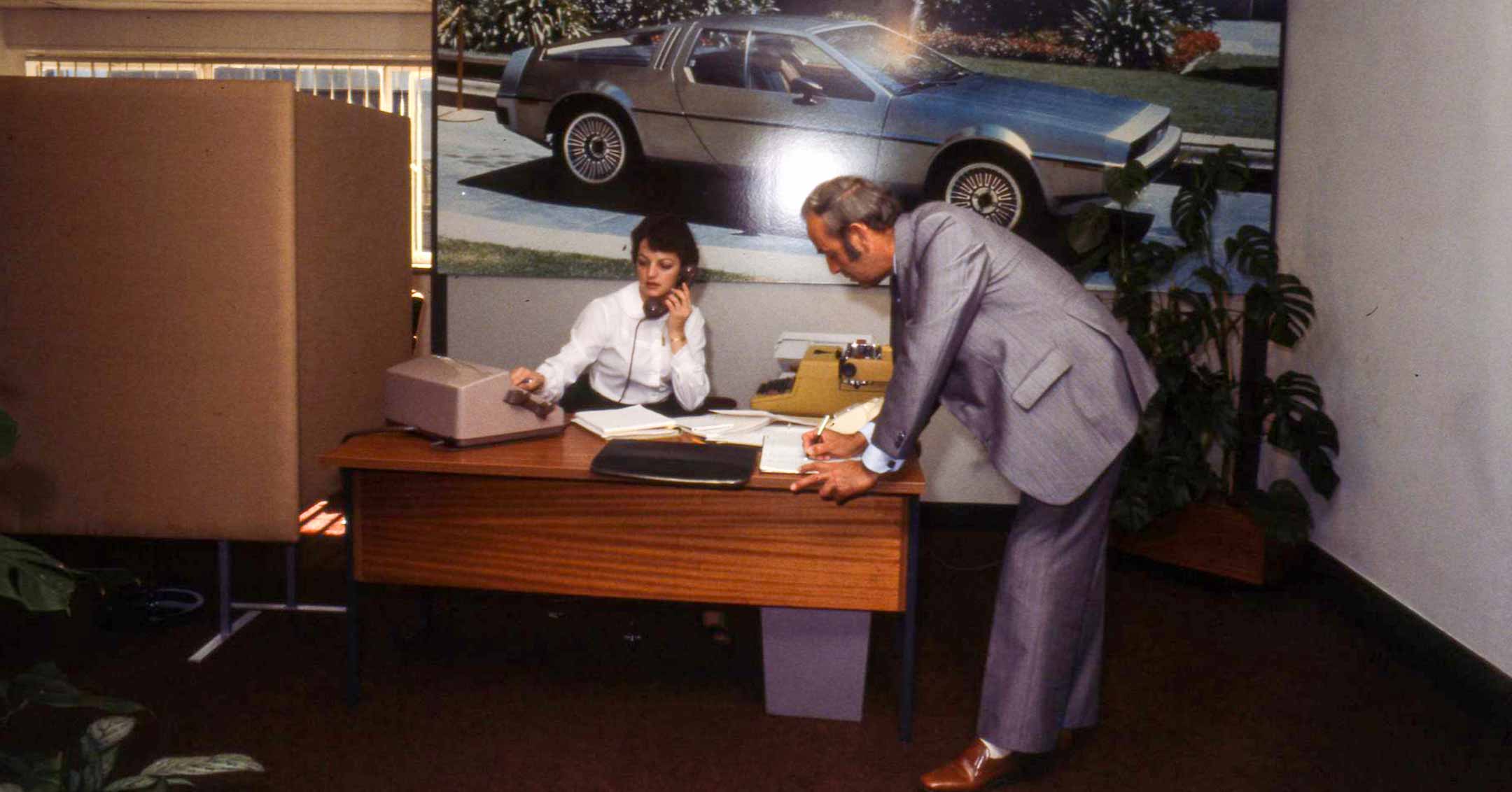
by Enda Mullen-BPCoventry Live – November 29, 2019 Look: Coventry connection with Back to the Future iconic sports car by Steve ChiltonCoventry Live – October 21, 2015 It is the world’s most famous time machine with its trademark gullwing doors atop a stainless steel-clad body. The DeLorean DMC-12 sports car is instantly recognisable to even the most clueless car enthusiast after becoming the iconic star of the Back to the Future movie trilogy. And now its creators are gearing up to celebrate a milestone anniversary for one of the best loved cars of all time – which is one of Coventry’s lesser known motoring success stories. This year will marks the 35th anniversary of the construction and first public showing of the production version of the vehicle in 1980 – the ‘Visioneering Show Car’. But what many people don’t realise is that the star of the science fiction comedy which transported Marty McFly back to 1955 life in the fictional California town Hill Valley has strong Coventry connections. The Belfast company’s British headquarters and procurement office was based in Christchurch House in Coventry city centre from 1979 to 1982. Staff were hired to set up new supply deals in the UK and the DeLorean even underwent endurance testing at the city’s head office. And next year the remarkable creation of John Zachary DeLorean will be celebrated with a reunion of former employees based in Northern Ireland and Coventry. Organised by the firm’s previous director of purchasing, Barrie Wills and financial controller David Adams, the reunion has been arranged for next year’s May Bank Holiday weekend at The Culloden Hotel at Cultra, near Holywood, County Down. Mr Wills said: “We are hoping that staff and shopfloor workers alike from Dunmurry, Coventry and the Adelaide Industrial Estate plant of CP Trim will attend the reunion. “We have also arranged a conducted tour on Tuesday 5 May of part of the former Dunmurry plant, now utilised by the French automotive foundry group, Montupet.” The story of the iconic car started in April 1973 when John left General Motors where he was vice president of car and truck production, to follow his dream of creating his own company and building a car that GM would never make. With help from Italian designer Giorgetto Giugiaro, who worked on the new car’s styling, and Lotus Cars, which undertook the engineering of the car, the first running prototype was quickly completed. Its groundbreaking technology took the media by storm and the company set up a greenfield production site in Dunmurry, near Belfast, before John then focused on the UK and opened the Coventry headquarters. When the DeLorean rolled off production lines it received promising reviews but when the recession hit, the expected sales failed to materialise and unsold vehicles started to mount up. In February 1982, the receivers were called in and a rescue bid was devised. However when the FBI arrested John in a Los Angeles hotel room for ‘narcotics violations’ the DeLorean dream ended. Despite its brief time in the city, the two former company executives believe the anniversary is a good reason for a long-overdue reunion of its former employees. Those interested in attending the reunion should contact barriewills42@gmail.com for more information.
John DeLorean, June 6, 1987
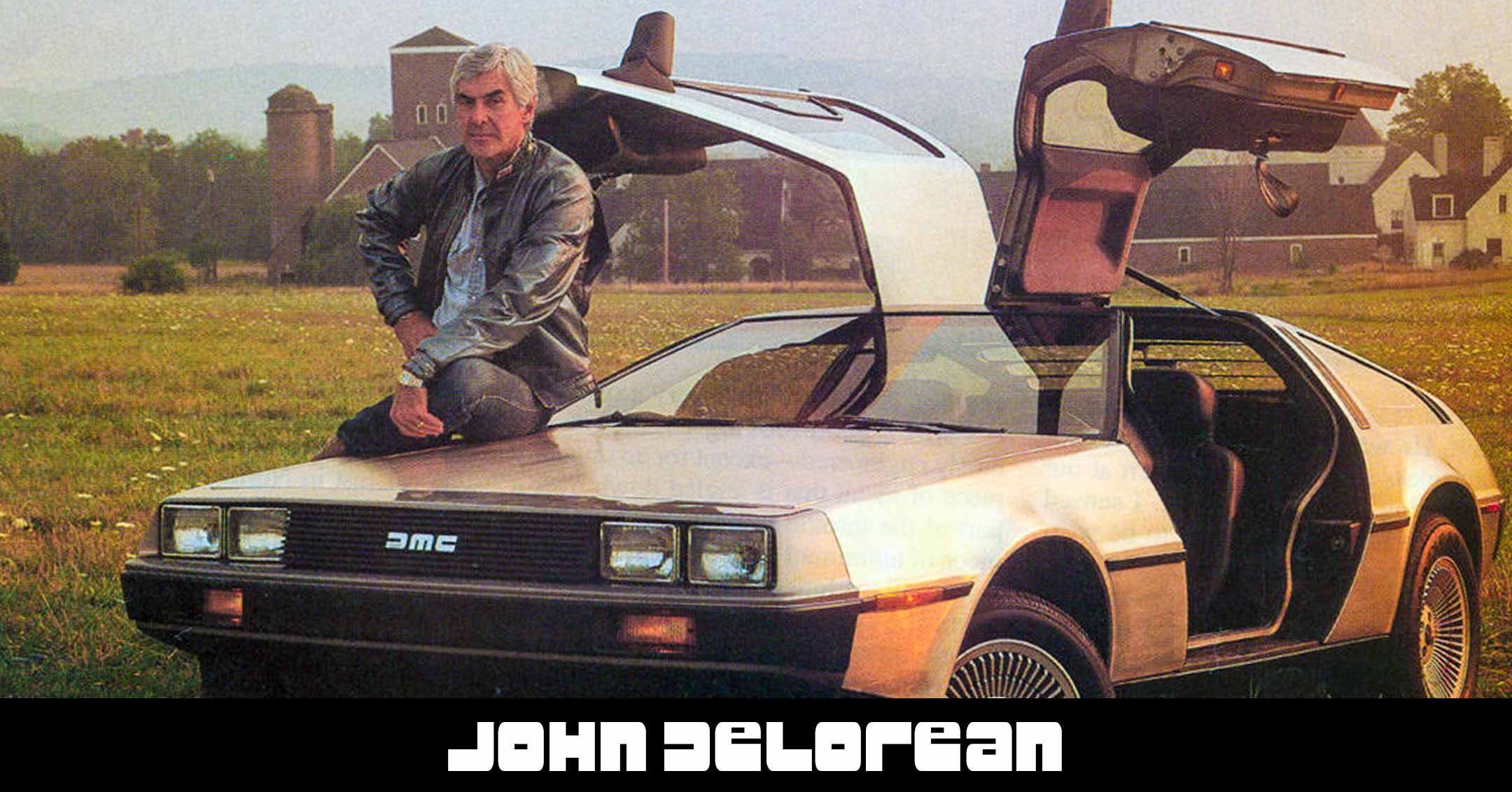
Thanks to Darryl Tinnerstet, this special episode of DeLorean Talk features John DeLorean, talking to a church group on June 6, 1987. Darryl attended this talk with one other DeLorean owner, and saved the tape for all these years. John talks about his life growing up, his time in jail, his time at General Motors, his family, the trial proceedings, and how his life has changed.
Systems Analysis Approach to Integrating Air Bags Into a Production Ready Small Car
Michael U. Fitzpatrick Fitzpatrick Engineering Route 5, Box 495A Warsaw, IN 46580 Contract No. DTNH22-81-C-07330 Contract Amount $24,685 This document is disseminated under the sponsorship of the Department of Transportation in the interest of information exchange. The United States Government assumes no liability for its contents or use thereof. Click here for the PDF of the original file. Dynamic Science, Inc. (now Exponent) appears to have done the testing. Abstract During the course of this study test data derived from Contract No. DINH22-81-C-07330 was use to further validate the computer models “DRACR” and “PAC.” These validated computer programs were used to investigate other crash velocities, operating environments, design specifications, occupant sizes, occupant protections, and sensing and/or inflator staging scenarios. Design options for a restraint system package that, based upon computer simulations, promises to most optimally meet the combined and sometimes conflicting requirements of various occupant sizes, occupant positions and crash conditions are recommended. TABLE OF CONTENTS SECTION – TITLE – PAGE NO. 1.0 – BACKGROUND – 1 2.0 – PRE-TEST COMPUTER SIMULATIONS – 6 3.0 – INTEGRATION OF RESTRAINT SYSTEMS INTO VEHICLE pace – 12 4.0 – TEST RESULTS – 22 4.1 – Crash Test NO. 1 cones – 23 4.1 – Crash Test No. 1 Injury Measures – 31 4,2 – Crash Test No. 2 – 45 4.2 – Crash Test No. 2 Injury Measures – 50 APPENDICES A – DATA TRACES FOR CRASH TEST NO. 1 – A-1 B – DATA TRACES FOR CRASH TEST NO. 2 – B-1 1.0 Background In March of 1981, Fitzpatrick Engineering was awarded a contract by NHTSA to use a “systems analysis approach” to integrate air bag restraint systems into a “production ready; small car.” The term “systems analysis approach” is used to convey the concept of using high speed digital computing techniques to design and integrate an airbag restraint system into the subject car that is optimally compatible with its crash environment. If successful, the necessity of conducting a large number of preliminary tests prior to converging to the final design will be eliminated since the many parameters that affect restraint system performance can be investigated in a more efficient manner. We say more efficient manner because the cost and time for the computer approach should be less than what would be spent for a trial and error approach that relies on a large number of rather expensive tests. The reason for using a “production ready, small car” was two~ fold. First, there is a need to demonstrate that the restraint system. design that evolves through the systems analysis app~ roach will perform effectively in a structurally unmodified, production car: Second, the car should be less than 3000 lb total weight to reflect the current trend to smaller vehicles. The vehicle chosen by NHTSA for this program was the DeLorean sports car. This vehicle is a two-passenger, rear engine car with gull wing doors and a stainless steel exterior skin as shown in Figure 1. The main structural frame is constructed of steel and roughly resembles an “X” with the middle of the X comprising the center spine that runs through the passenger compartment. Figure 2 shows this X-frame. Fastened to the main X-frame is a fiberglass body constructed glass reinforced panels and foam filled beams as shown in Figure 3. The vehicle curb weight is approximately 2700 lb. Fitzpatrick Engineering’s main tasks in this contract were to: a) Design a preliminary driver and passenger airbag restraint system using computer techniques, b) Specify the restraint system components to be used in the two barrier crash tests and recommend test velocities. c) Direct the test contractor, Dynamic Science, on the integration and installation of the restraint systems into the DeLorean. d) Perform as Engineering Test Director for the two, frontal, barrier crash tests. The purpose of these two crash tests were primarily to determine the structural response of the DeLorean at two different crash speeds and to provide an early indication of the performance potential of the computer derived restraint systems in this systems analysis approach to airbag integration. 2.0 Pre-Test Computer Simulations Fitzpatrick Engineering studied existing crash data for the DeLorean at 30 mph as well as the passenger compartment interior design and volume and overall vehicle structural design. Based upon this study, we recommended that the test Speeds for the upcoming crash tests be 35 and 40 mph. This recommendation was made to representatives of NHTSA and DeLorean Motor Co, at a meeting held at DOT headquarters in Washington D.C. In our judgement, the most information could be learned from these test speeds since the vehicle had already been crashed at 30 mph by DeLorean Motor Co. with very good structural performance and since the merits of the systems analysis approach Of restraint systems design would be tested more Severely at the higher impact speeds. However, since we didn’t know the Crash pulse at these higher speeds, the Preliminary computer simulations were of a qualitative nature. That is, we estimated the crash pulse at 35 and 40 mph based upon the 30 mph crash pulse and then conducted a series of computer runs in which we: a) chose the airbag shapes and volumes, b) evaluated eight different passenger inflators (including the possibility of using two “driver type” inflators instead of the one cylindrical type passenger inflator), c) evaluated the restraint system performance at 10 and 15 msec sensing times to determine crash sensor specifications, d) investigated the effect of staging the “driver type” inflators simulated for the passenger System to select the inflator configuration that would optimally satisfy the requirements of the forward positioned child as well as the normally seated adult. In addition to the computer simulations, we made a subjective evaluation of the DeLorean interior to decide on the way the restraint system components would be installed in the vehicle. The result of the computer simulations using the DRAC and PAC computer models and this inspection of the vehicle led to conclusions that aided in selection of
The DeLorean in the bedroom
by Darryl Tinnerstet This is one of those stories that you hear and say “yeah, right.” But it’s true, and I have the photos to prove it. From 1986 through 2004, I operated Specialty Automotive in Olympia, Washington, selling DeLorean auto parts, while also working full-time as an engineer. I drove to 48 states buying up dealer parts inventories, and used ads in Hemmings Motor News to retail those parts, soon building up a small but thriving sideline enterprise with customers worldwide. I also bought a number of wrecked DeLoreans, many through HMN ads, and built up a nice supply of used parts, too. In 1994, I was talking on the phone to a DeLorean parts customer in Switzerland who had owned several DeLoreans there. He asked for my help in finding him a brand new DeLorean car in the US. Even though they would have been 12-14 years old by then, it was not totally unreasonable to find a “new” one, since some had undoubtedly been purchased and put into storage. I just chuckled and said, “Sure, I’ll try, but don’t expect one any time soon.” When I got off the phone, I picked up my latest copy of Hemmings and turned to the “D” section. Several low-mileage DeLoreans were listed, but one 1981 model in particular caught my eye for two reasons: It was in Oregon, which meant it was within driving distance of my home in Washington; and the ad said the car had only 81 miles on it. I figured they might have confused the mileage with the year, but it was worth a phone call to find out. I called the owner and verified that it did indeed have only 81 miles despite being 13 years old, and that it was located in a small town on the southern part of the Oregon coast. Deciding this was too intriguing to pass up, I took a day off from work and asked my elderly mother if she wanted to go for a long ride. We drove about 200 miles south down I-5, and then cut over to the coast. After many long hours in the car, we got to the owner’s 200-acre ranch, home to ostriches, emus, buffalo, yaks and as we were to see, one DeLorean. The elderly gentleman, a retired auto dealer, proudly showed us around the farm and pointed out all of his animals. He then invited us into the house, where his gracious wife provided snacks. When I asked about the car, he explained how he had bought it new in Reno and had it shipped to storage when they lived in California. When they moved to this ranch, he and his wife had a nice seven-bedroom house, but there was no garage. The car sat in a carport for a short time, but he was concerned about having it outside. I asked where it was now. “In the bedroom,” he said, just off the living room where we were sitting. “One day when Mama was in town, me and the hired man took a chainsaw to the back wall of one of those unused bedrooms,” he explained. With carpeting, wallpaper, makeshift ramps and plywood doors still in place, there it was. The fit was so tight that from the inside door of the bedroom you could only get to one side of the car, having to either crawl through the car or open the outside “doors” to reach the driver’s side. I was concerned about the mechanical condition of a car stored for 14 years, but he stated that once a month, he opened the plywood doors and started the car, and every six months he siphoned the fuel out and replaced it. We fired it up, and it idled down perfectly. The car, a five-speed with gray interior, looked and smelled new. The engine and underneath of the car were spotless. The heat shields by the muffler and catalytic converter were not even discolored, and the muffler itself barely showed signs of having been used. In a word, it was perfect. He went on to tell me that he had bought it as an investment, but that now his health was failing. In fact, he would soon be selling everything he owned. We had a long and very nice visit, but had to head for home, going the slow route up Highway 101 along the coast. Now I was faced with a dilemma: I had promised my customer in Europe that I would try to find him a new car, and would probably not have located this one had it not been for that request. On the other hand, I would likely never again find a collector car as pristine as this one at such a fair price. When we got home, I called Switzerland and described the car, and told him to let me know very soon if he wanted it. Of course he did, so we proceeded to complete the sale. I could have just bought it for myself and he would have never known, but I had given my word, so that was not an option. Plus, I was not really in a position to keep it as a non-driven show car, since I already had three DeLoreans – my daily driver, my supercharged Chevy-powered DeLorean, and a turbocharged project, plus several other vehicles. In the next week, there were frantic calls to Oregon and to Switzerland as we tied up the deal and awaited the transfer of funds. But the process was taking too long, and the seller was getting nervous as other prospective buyers were telling him he had sold it too cheap. Finally I called my mother and said, “Ready for another long ride?” We hitched up my car trailer, hit the bank for a quick loan (thanks to my open-ended home equity account), and headed south. We had another nice visit before I bought the car, drove it out of the bedroom
What is the DeLorean made of?
The DeLorean was originally conceived as a stainless steel paneled, gull-wing door design from the beginning. The panels are 304 grade stainless steel, the exact kind of stainless steel used in commercial kitchens and equipment. That means it’s very durable and difficult to damage. There are eight exterior stainless steel body parts, including the front left and right fenders, the rear left and right fenders, the gull-wing doors, the hood, and the roof “T-panel.” The panels are connected to a molded fiberglass shell with internal foam and steel reinforcements, that contains the wiring and passenger compartments, and is bolted to the steel, single-wishbone double-Y frame for strength, which also contains all suspension and drivetrain components. The stainless steel doors and body panels are bolted in place, and don’t add much weight, resulting in a car that only weighs around 2,800 lbs. Cleaning the stainless steel panels is easier than most people think… just like a stainless steel sink, any water and soap will take the dirt off, and a lot of DeLorean owners use the same products you buy in the store for keeping stainless appliances shiny. Most of the body panels are still available, but the front-left fender is in very short supply today, causing the price to be as much as 4 or 5 times the cost of the front-right fender.
Ready Player One Experience on Hollywood Blvd. – March 2018
[su_embed_google_photos_album_plugin googlesharelink=”https://photos.app.goo.gl/vLvHbcfY5keUvmRA8″] In early 2018, the Ready Player One movie created a maze and movie memorabilia experience on Hollywood Blvd. in Los Angeles, CA, which also included an RPO DeLorean (VIN #06235.) An Interactive ‘Ready Player One’ Pop-Up is Coming to Hollywood and Vine Next Week /Film Enters The Oasis at Hollywood’s ‘Ready Player One’ Challenge Ready Player One Challenge Pops Up in Hollywood How This Interactive Maze Immersed Guests in the World of ‘Ready Player One’ [su_google_photos_pro album_id=”AF7RCjFFv4Mmzn7I2JwDlOfCjeueC2UPghnm_XUdY9US2N_DIN94sxwt39u2hyJWm9z8kkAy2w_M”]
How much do DeLoreans cost?
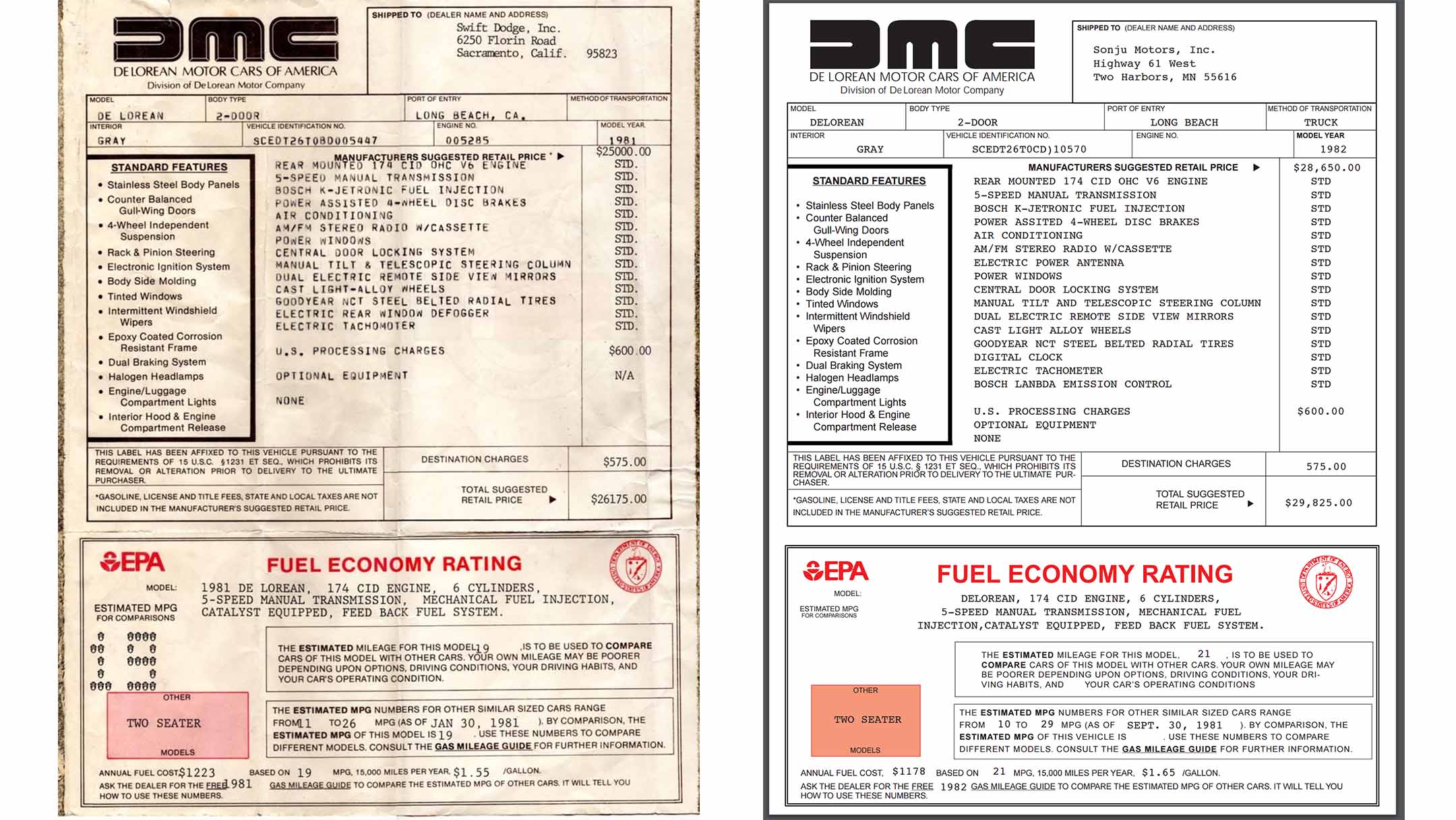
Like a lot of old, classic cars, the cost of a DeLorean depends on what you want out of it. If you’re looking to do a full rebuild in your garage, you could pick up (most) of a DeLorean for $10,000. If you want to climb into one, turn the key, and drive it across the Country without any worries, that would probably cost you about $45,000 (in 2019.) If you want a replica DeLorean Time Machine, Danny Botkin builds the best ones out there, and could cost you $80,000 (more if you go through big company, rather than an independent.) Of course, there’s a middle ground. There are a number of DeLoreans for sale any at any given time. You could pick one up for $30,000, but expect to put in another $10,000 getting it to a very trustworthy car. And that’s assuming you don’t take it to a corporate shop. If you can, do at least some of the work yourself to save some money. Or, reach out to the extensive DeLorean community for help. The DeLorean’s original code-name was the “DMC 12,” for the expected sale price of $12,000. Due to many engineering issues and changes, the cost kept going up… and so did the price. So, the 1981 DMC DeLorean ultimately listed for $24,000. Some lucky dealers got a premium for the new cars, while others sold them for less, just to get them off the lot, once DMC went out of business.
Learn about the DeLorean
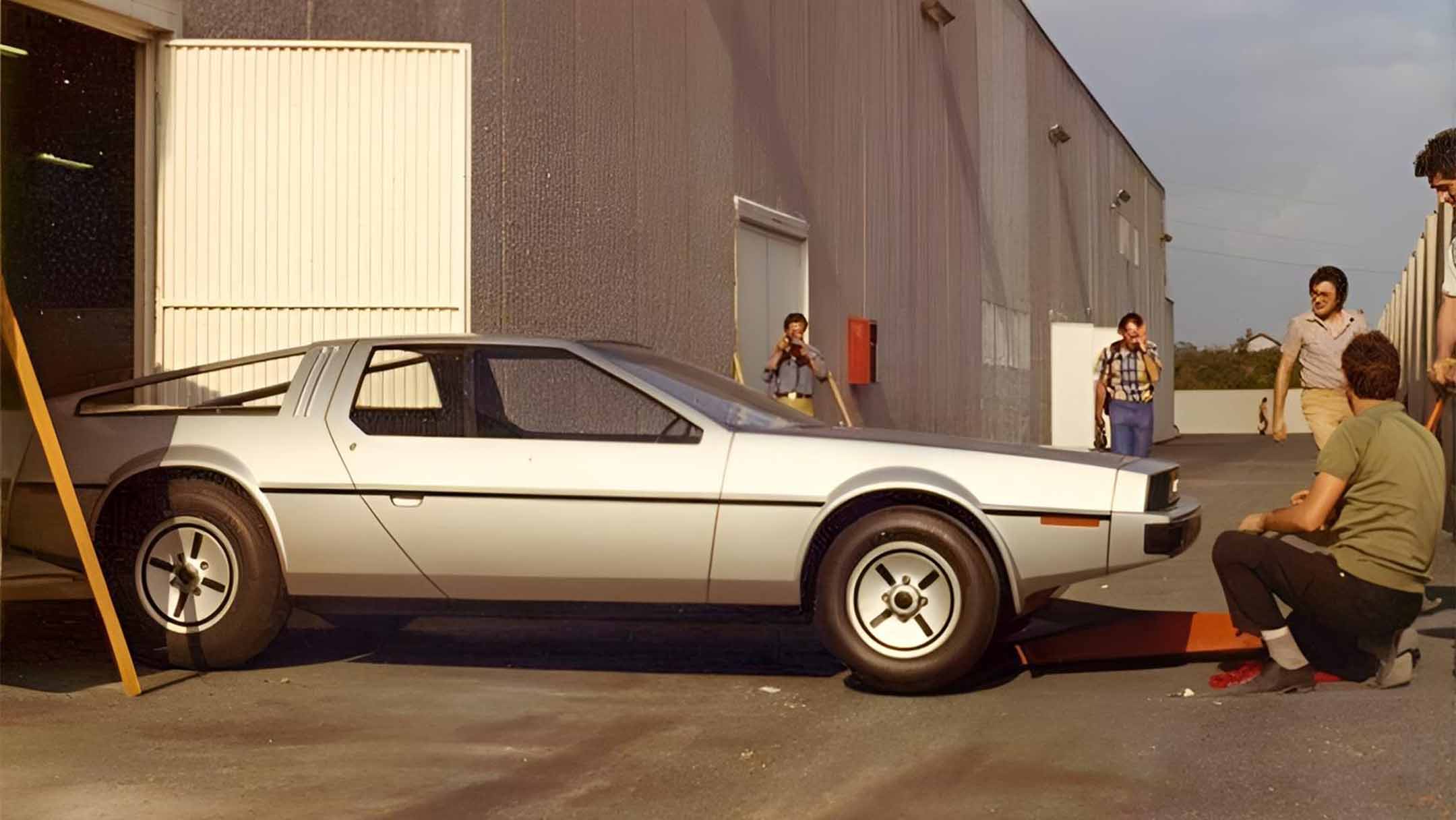
Yes, it was / is a real car. The DeLorean was completely built in Northern Ireland, between 1981 and 1982, with 3 model years – 1981, 1982, and 1983. The company came and went before Back to the Future was released, and the movie production bought and used the cars without the knowledge of even John DeLorean himself. The DeLorean was built for the North American market, and there was a dealership network with full Service Centers in all 50 states. How many DeLoreans are there? Barrie Wills, director of purchasing (and the last employee) of the DeLorean Motor Company, Ltd., has said that 9,080 DeLoreans were built. It’s estimated that approximately 4,500 DeLoreans still exist – although not all of them are road-worthy. Over the years, many DeLoreans were placed into storage and forgotten, others have been destroyed in wild fires and house fires, others have been wrecked in car accidents, and some have simply been left to the elements in driveways, carports, and garages. Many have also been taken apart to restore other DeLoreans that were in better condition. Are DeLoreans slow? / Can they go over 88mph? The DeLorean was never intended to be a drag racer, but rather a highway cruiser. As such for both comfort and fuel economy, the DeLorean was given tall gear ratios and tuned more for emissions than power. While the speed was decent, compared to other vehicles in its time, it’s true that other advancements give modern cars better performance. The 5-speed manual transmissions also performs better, given the ratios and additional gears, not to mention the lack of a lock-up torque-converter. On the flip side, the DeLorean has fantastic low-end torque and will not slow down when encountering steep hills, and will even continue to gain speed uphill where many other cars will bog down. Yes, the DeLorean does indeed go faster than 88mph. The 85mph speedometer wasn’t meant to display a lack of prowess, instead, it was a government mandate to discourage excessive speeding to conserve fuel. In fact, DeLorean reported the the car had a top speed of around 130 mph. Many DeLorean owners have reportedly done 110-120mph, using phone GPS for measurement. A few favorites quotes about the DeLorean: What kind of engine do DeLoreans have? The DeLorean is equipped with the PRV V6 engine. But, the history of the PRV power plant is bigger than the DeLorean. Designed as a pan-European engine to compete with the Small Block Chevy, the PRV was co-engineered as a cooperative engineering effort between Peugeot, Renault, and Volvo (hence the name.) It’s a completely modular engine in every sense of the word. Externally the lower crank case section is swappable to accept different sized and shaped oil pans and motor mounts, depending on which vehicle the engine was supposed to be installed into, as well as up top cylinder heads accepting carburetors, and port fuel injection, as well as the ability to fit dual overhead cams. Internally the engines utilizes wet-jacket sleeves for the cylinders, where the cylinder liners are suspended in coolant. These can easily be swapped out to modify displacement of the engine without having to bore it out. In the DeLorean, the PRV has an output of 130 bhp (brake horsepower.) However, this number has been increased significantly for the PRV in other modified applications to over 300 bhp for production cars such as the Venturi Atlantique, and in excess of 900 bhp for professional racing applications, such as Peugeot WM 88 for the 24 Hours of Le Mans, where the engine has run, won, and even set a still unbroken speed record in 1988. Are DeLoreans hard to fix? It depends on the skill set of the mechanic performing the work. But overall, no, they are actually rather easy to work on in many respects. Firstly, the engine compartment is rather cavernous. Particularly when compared to modern cars. There are very few instances where bolts or components are difficult to access, but that’s the case with most cars. In fact, you’re usually able to get an entire arm in to where you need to reach. While K-Jetronic fuel injection does require a bit of education and some specialty tools to repair and tune, it’s not different from any other cars of the era, and not impossible for most people. Second is the parts supply, of which the DeLorean has a leg-up on even some modern cars. The principal behind the design was to make everything the you can see or touch to be unique to the car. But mechanical, the DeLorean was intended to use as many ‘off the shelf’ parts as possible. In addition, when DeLorean Motor Company closed its doors, they left behind a large number of parts that are generally available today. (The “left over parts” were actually the cars that were not produced after the bankruptcy.) And thankfully, there are a number of DeLorean Parts and Service centers around the world who sell parts and maintain the DeLorean. Overall the DeLorean can be a very reliable car, even by modern standards. But remember, it’s still an old car, and needs maintenance like any vehicle. Why a DeLorean for Back to the Future? The original script for Back to the Future was much different from the final movie. One such aspect was the time machine itself which, at one time, was a refrigerator. But concerns arose over the use of a refrigerator, as it was feared that children playing with abandoned appliances might close themselves inside and become trapped. (Of course, that was before they switched to new latches that could be pushed open.) So, that idea was nixed. Instead the decision was made the use a car, so that Doc Brown could be mobile during his travels through time. Bob Gale and Robert Zemeckis (writers of BTTF,) have also said they thought the DeLorean was perfect for the joke when Marty crashes into the barn in 1955, and the farmer says it
DeLorean LED Headlights
by Dave Tavres (DMC #10515) DMC #10515 now has LED headlights… and for A LOT less than you may have heard! I’m a huge fan of Toby Peterson’s Wings-A-Light LED Headlight Kit, but it’s out of my price range at the moment. The biggest reason I like Toby’s LED headlights, as that they LOOK stock (when not turned on.) That is, the GLASS just looks… ‘right.’ There are no weird silver bubbles or yellow squares where the SMD (surface mounted device) LEDs are… Toby’s have the right pattern in the glass and they conceal the LED bulbs perfectly. I’m also sure that with Toby’s background as a Boeing engineer, his system is fantastic. Again though, more than I can afford at the moment. Then Kevin Krinn mentioned this thread on DMCTalk.org to me. Whoever “DeLorean03” is, thanks to them for the tip… the single biggest tip, which is – the glass housings! The 4×6 inch glass pattern looks very much like the “original” glass (that is, the headlights that were on my car when I bought it – which likely were 30+ years old, since my car sat for 27 years.) While I’m not a nutcase about the car being original, I’m a bit crazy about the headlights. Those ‘bubble’ LED headlights just make the iconic front of the DeLorean look… weird. I don’t like it. That’s why I liked these glass housings (listed as “GS Power’s Chrome OEM style 4 x 6 inch Glass Lens H4 HID LED Halogen High Low Beam Headlight Lamp Conversion Replacement Kit (2 pc) | Lights Not Included” – along with the fact that they are just *$20* per pair! Yes… not on sale, not with a coupon… $20. They fit perfectly when I installed them, with no issues at all. The only note I have about the housings, is that they are missing the three ‘nipples’ found on most headlights, which are used by headlight alignment tools. Of course, the glass alone won’t get you headlights. You need to buy LED headlight bulbs. The glass is designed for the “H4″ bulb pattern, which is easily found online. I ordered the “LIGHTENING DARK Super Bright H4 LED Headlight Bulbs,CREE Chips Hi/Low Conversion Kit,6,000K Cool White – 10,000 Lumens, Adjustable Beam” bulbs, which were just $50 for two! Again, they installed and worked perfectly! They are ‘long’, but they fit in the headlight buckets just fine. The light output is listed at 6,000K so they are very ‘white’, but that seems to be common when I drive down the road these days and see newer cars with LED headlights. Of course, the ‘white’ light does NOT fit the stock DeLorean – but I don’t care. I’m more interested in ‘seeing’ while driving, rather than what the car looks like while driving. And honestly, only super-purists will be upset that the output of the headlights isn’t stock. Oh, and there’s a slight possibility you’ll need to do a serious headlight adjustment. I didn’t move the adjustment screws during installation, but when I first took the car out that night, the headlights were lighting up the tree-tops on my street. Lastly, I ONLY installed the two ‘low-beam’ headlights. Partly because this was a cheap test, and partly because I just don’t use the high-beams. HOWEVER, you DO need to buy the adapters for the install, or these LED bulbs will run on the ‘high beam’ setting by default. Thanks to Chris Miles for pointing out the fix, and Justin Trabue for the photo of the wiring fix. The DMCTalk thread does talk about a wiring change, but it’s a bit confusing… basically, you need to switch the socket wires to make these bulbs run as low-beams. Another side note… each LED has a heat-sync and a fan… so if your headlights are on while you’re standing there, you can just barely hear the fan through the fascia. So, all-in, it was $70. Not bad for a ‘cheap’ conversion that puts out a LOT more light. I’ve now driven the freeway and side roads several times at night, and other than adjusting them up a bit more, I’m very happy with the outcome. Todd’s installation of the same glass
Cooking in your DeLorean: To Tint or Not To Tint
by Gordon Carpenter | VIN 10987 Having owned my DeLorean since 1985, VIN 10987, I have seen the ravages of UV and IR radiation on the DeLorean upholstery, and have experienced how quickly the cabin of our beloved cars can heat up when left in the sun. My wife frequently points out that the sun is ‘most always beating in on her side’ of the car, or that her knees are burning from the heat through the front windshield. My friends, we can do something about this! Window Tinting used to be something only operators of limousines did for the privacy of their clients. Today nearly every new car comes with tinted rear and side windows. Why? Because today’s window tint films offer privacy and protection from both UV and IR radiation. This translates into less UV damage to your car’s upholstery and lower heat accumulation in the cabin when exposed to the sun. The difference with tint is very noticeable! I started my search for automotive window tinting, focusing on Crystalline and Ceramic products. I wanted a product that would make a big difference for the money I was spending. There are six basic types of window tint that I have outlined below. Search the web for specific details and distributors for each the window tint product in your area. There are many factors by which the manufacturers rank their products, so, at the bottom of this article I have included a glossary of terms to help you understand. For me, the key factors are: %TSER: Percent of Total Solar Energy Rejected %VLT: Percent of Visible Light Transmitted %IRR: Percent Infrared Radiation Rejected and of course $$$: Price! Where available, data for more than 70 tint products have been recorded to the “DeLorean Window Tinting” spreadsheet. Within the Crystalline and Ceramic products, nearly every tint option can deliver 96 to 99% UVR blocking, making this an expected baseline objective. For me, the %TSER speaks to the expected performance once the window tint has been installed. This spec. quantifies to the overall capability of the product and is the one ‘factor’ that all manufactures have calculated for comparing tint products. I was looking for a window tint with at least 50% TSER, and a color that is light enough that the California Highway Patrol wouldn’t notice (and demand that it be removed.) The %VLT closely relates to the relative tint color. Obviously, the darker window tints have a lower %VLT. The California Highway Patrol code specifies 88% VLT in CA Vehicle Code 26708 paragraphs C1 & E1. However, paragraphs C2 & E2 of the same code reference the Federal Motor Vehicle Safety Standard where a minimum of 70 %VLT is required. With so many cars on the road today using tinted windows, the standards don’t seem to be enforced as strictly. The 2019 Window Tint Specs chart I’ve created shows you the relative color of the Tint films alongside the technical specs. I visited many auto window tint shops learned that I prefer the Crystalline Series by 3M. If money were no object, I would install CR70 tint to the front windshield and CR50 or CR40 to all side windows of the DeLorean (excluding the rear window.) This will result in a pretty clear front windshield and darker side windows. A second favorable option is the Llumar Stratos Series S70 tint film. And a very close 3rd option is the Llumar Pinnacle Series PS50 tint film. In those cases, I would install either of those tints all the way around for a uniform look – that ‘should not’ be considered too dark when compared to the overall vehicle population on the road today. Selecting a tint film for your car can be intimidating because there are many types of films, and each film has various qualities. The challenge is picking a film that meets all of your objectives. For example: Metalized window tinting blocks solar energy very well and adds to the window’s strength and shatter resistance. However, metalized window tint greatly affects mobile phone operation within the car, unless you install an external antenna. Dyed window tinting is the way to go if you have a tight budget, but the overall performance isn’t as good as Crystalline and Ceramic products. Hybrid window tinting is a combination of Dyed and Metalized film, offering the best of each while minimizing the negatives of each film type. Carbon window tint provides many advantages over other films. The unique matte-finish makes it attractive, while blocking around 40% of IR radiation, which is primarily responsible for heating the interior of your car. Besides keeping the vehicle’s interior cool, it also prevents (or slows down) upholstery fading. Carbon film helps save energy by reducing the need to cool/heating during weather extremes. Carbon film is also durable and doesn’t fade like dyed tinting. Crystalline window tint achieves good rejection of most solar radiation (UV & IR) without making the window dark. This is an excellent choice for cars with very large front windshields like our DeLoreans. Price is likely to be the only negative a factor on this product. Ceramic window tint is a high-performance material. Containing microscopic particles known for their non-conductive properties, Ceramic tint is expensive, but proven to have high total solar energy rejection capability. Wrapping up, the price of window tinting can deter you from installing the very best product available. In San Diego, I got a quote of $1200 to install the 3M Crystalline products, $650 to $400 for several of the Ceramic products, and the lowest bid for installing a Nano-Hybrid Carbon tint on a DeLorean was $375. Installing a tint film in a DeLorean is a very tedious and awkward task. The front window is very large, but access to it is limited by the small cabin and the rear view mirror is an obstacle for ‘freshmen’ installers. The side windows are easier, but still require a fair amount of skill. To my surprise, the curvature of the
Air Filter Update
by Chris Miles Many people in the car world like simple upgrades to make their cars better and more efficient. One of those upgrades is about making the car “breath” better. If you have already done the “cold air intake” modification, then there is one other thing you can do – replace your paper air filter with a reusable K&N air filter. For many years, K&N has been a trusted name in automotive performance upgrades. Some DeLorean owners might be reading this and saying to themselves “this isn’t news to me, I already have a K&N filter in my car.” That may be true, as K&N used to make an air filter for a PRV Volvo that fit the DeLorean. K&N discontinued that filter, and they are becoming hard to find. Some vendors might have stocked up of that part, or are selling a different K&N filter that also fits the DeLorean. So, I decided to research this myself and found a filter that K&N makes for a modern car. Taking the dimensions of a stock DeLorean NOS filter, I searched K&N’s catalog for filters that matched as closely as possible. It turns out that the filter used in the Mercedes C Class closely matches the dimensions of the DeLorean filter. The part number is 33-3072. I ordered one at AutoZone and brought in my DeLorean air box to test fit the new K&N filter. It fits snugly and makes a good seal. I think it actually fits better than the Volvo application (#33-276) (see pictures below). The filter retails for about $55. If you buy it locally, you get the benefit of an easy warranty exchange should you ever need to replace it. Some people have their own opinions about the effectiveness of K&N filters – in that case, they should continue to use the standard paper filters. For everyone else, the K&N filter may be a long-term solution for finding a good air filter for your DeLorean. Check the crossover-parts list for other places to buy the air filter, as well as other parts. [telaalbums album=”Air Filter Update”]
DeLorean Interior Sound Level Test
Most of us don’t think too much about sound levels in the DeLorean because we’re just enjoying driving the car. But we thought it would be interesting to ask the DeLorean community to do a little test and collect some data on interior sound levels. If you feel comfortable doing so safely, we hope you’ll install this decibel app on your smart phone, and get an average reading while driving the car. Step 1: Install the decibel meter (Android | Apple) Step 2: Using the app, get the AVERAGE decibels, using these conditions: Drive at 65mph, on the freeway. Windows are up/closed. Radio is off. Vent fan is set to 0 / off. With the app open and measuring, hold the phone directly above the shifter, at the same height as the A/C vents. Take note the AVERAGE decibels, then fill in the form below (and, if possible, email a screenshot to contact@DeLoreanDirectory.com with the VIN.) DeLorean Interior Sound Levels
Some interesting DeLorean Census data…

The DeLorean Census was started because the existing VIN lists just didn’t have the depth of detail we were looking for about the DeLoreans left in the world. Since mid-2017, the Census has collected hundreds of submissions, primarily from owners, and now it’s time to display some of that data in interesting (although not terribly USEFUL) ways. Over time, as more DeLorean VINs are submitted, whether by owners or just by observers who see them listed for sale on websites or at car shows, this data, and these charts may become useful to the DeLorean community. Useful for how cars are priced when listing them for sale… or for determining a fair price when buying a DeLorean. It may be useful to some owners when working on a restoration, or the data might be useful when someone is writing an article or book on our wonderful DeLorean automobiles. In any case, these charts, and this data, should be at least interesting to owners and fans alike. DeLorean Census Charts
DeLorean Floor Mats – Choices, Choices, Choices…
by Gordon Carpenter – DMC #10987 I’m always motivated to improve the state of my DeLorean when my wife makes comments. After 15+ years of service, the floor mat on her side was not holding its shape, so I decided to replace the set. The grey carpet with the DMC logo stitched in black thread has always been my favorite, but to my surprise it is no longer available. Currently, the DMC logo may only appear on products sanctioned by DMC-Texas. After all of my research, I elected to customize my new floor mats from Lloyds with the letters of my personalized California license plate ‘SEXY 2-DR’ (Sexy 2-door). Here is what I found… Let’s start with the DMC-Texas option… DMC offers very nice floor mats in either grey or black carpet, with a DMC logo. The mats are precision cut to fit the footwells, and come with a ‘nubbed’ backing to ensure they don’t slip around. The DMC logos are NOT embroidered, but rather die cut carpet of contrasting color that has been welded in. The DMC logo is black for the grey mats and white for the black mats. DeLorean Europe is now selling a slightly different version of the DMC logo floor mats. Online, DeLorean Europe still show mats that look like the DMC-Texas mats, however, when I inquired, I was sent a photograph showing a new design floor mat. These new mats differ in the following ways: 1) The DMC logo appears to be a logo patch that has been stitched in place. 2) The mats have a rubberized area, positioned below the driver foot pedals, to minimize the wear from your shoes. 3) the mats have vinyl seam binding stitched all around to finish the mat edge. They appear to be very durable. Custom floor mats with the DMC logo also appear on the PJ Grady website. I was very interested in these, as they appear to be identical to my old mats. Unfortunately, they are out of stock, there is no price shown and new stock has not been scheduled. Of course, there are other sources for DeLorean floor mats without the DMC logo. These sources have a proprietary mat material and already know the shape needed to fit the DeLorean foot well correctly. An example of these floor mat sources are: Lloyds Mats or Auto Accessories Garage. Lloyds will only embroider custom logos if they have copyright permission. Many years ago, the DeLorean Owners Association had permission to use the DMC logo and sold floor mats by Lloyds that looked very similar to those shown on the PJGrady website. To summarize, I prefer floor mats that have an embroidered logo. Embroidered logos remain sharp, they are durable, and embroidery thread colors are more fade resistant than the carpet. Additionally, seam binding around the edge, and anti-slip texture added to the back side of the mat are both very important finishes. In the end, I decided to forgo the DMC logo and customize my new floor mats in a different way. Lloyds Mats embroidered the letters of my personalized license plate ‘SEXY 2-DR’, which expresses my admiration of the DeLorean doors. In case you are wondering, this personalized plate was issued in 1985 by the California DMV, long before life got so ‘word sensitive’ and ‘politically correct’. With Lloyds, you have a choice of 4 different fonts and a wide range of colors for both the carpet and the embroidery thread. And so, for only $30 more on the floor mat order, my Lloyds floor mats are very personalized to VIN 10987. I’m very happy with my ‘SEXY 2-DR’ floor mats. As of April 2019, here are the prices: DMC Store – $149.50 US PJGrady – $ Unknown DeLorean.EU – $98.84 EUR Lloyds Mats – $89.90, Plus $30 To embroider Auto Accessories Garage Hexomats – $54.95
How to Save the DOA

by Dave Tavres – February 28, 2019 The DeLorean Owners Association started in 1983 and helped bring DeLorean owners and clubs together from around the world. The DOA did that successfully for many years. They created and printed several magazines each year, they helped owners find parts – and each other, and they became a source of information for the media, as well as a trustworthy source of information for the DeLorean community. With the mass adoption of the world wide web (the internet,) and computers in general by the mid-1990s, DeLorean clubs started creating their own websites, email lists, and newsletters that quickly expanded their own reach. Fast-forward to today. Just about every DeLorean club in the world now has a Facebook page and/or website, and DeLorean owners can easily share ideas and communicate across the globe through a number of different ways. The DOA served the DeLorean community well for many years, but it needs some drastic changes to stay relevant. I don’t want to see it disappear. Many people that I’ve said that to don’t understand why. Most of the time, other DeLorean owners insist that the DOA is ‘dead on arrival’ and just isn’t needed anymore. And I do mean A LOT of DeLorean owners. My response to that is this – there is no ‘mother-ship’ organization that currently exists to help promote the clubs, the cars, the owners, or the passion that the world has for our cars. Aside from DMCTalk.org and DeLoreanDirectory.com, there’s not really any good, singular source of information about the DeLorean. Plus, the DOA owns a very specific piece of IP (intellectual property) that I personally want to see shared with the public, but they don’t understand how to use it, or share, properly. The ideas below are offered to the community, but specifically to the DeLorean Owners Association as a way to keep the DOA from disappearing, and to attempt to make the DOA useful to the community again. I hope everyone who reads this letter will contact the DOA to let them, and everyone know your own thoughts – whether you agree with my ideas or not. The role of the DOA The DeLorean Owners Association should be an overarching “mother-ship” that exists, using these directives: The DeLorean Owners Association’s mission is to: How could this be achieved? Why? Because local clubs will always do a better job of outreach and support than a worldwide organization. Memberships The DOA should drastically reduce membership fees, and encourage owners and fans to support, join, and donate to their local DeLorean clubs – instead of an international group. The DOA’s financial needs should be small, so memberships should not be a source of income. How could this be achieved? Why? The DOA should be a helping hand to the clubs – not the ‘boss’ of the clubs. Also, with owners and fans paying a small amount each year, that means more people might join and could benefit from the information that gets shared. The primary focus of ‘memberships’ needs to be on the local clubs – that is, people should be joining and paying dues to the club nearest to them. Magazines Since 1983, the DOA produced around 100 issues of “DeLorean World” magazine. The DOA should continue to create the “DeLorean World Magazine,” but it should no longer be a pre-printed magazine. The DOA also has a large number of previously printed back-issues that could be sold at a greatly reduced price to clear out inventory, raise funds, and be used for other fundraising. How could this be achieved? Why? The single biggest reason is simple and obvious – just about anything printed in a magazine is already old news. The web and social media now share information in the blink of an eye. DWM should become a historical record of the DeLorean community each year, recapping the big and small news of the clubs, the owners, and the history of the car for that year. DOA Websites / Technology A simple website should be created with this content: How could this be achieved? Why? Because having a central point of information – from a (eventually) trusted organization, would be good for the DeLorean community. As of 2019, much of the DOA website is… D.O.A. with “coming soon” text that has been there for years. Events The DOA should NOT be the primary host or organizer of events. Instead, the DeLorean Owners Association should, when feasible, contribute time, resources, and support to any club or organization that puts on an event that expands interest in the DeLorean automobile. How could this be achieved? Why? Because the DOA is no longer big enough to organize events; they don’t have the experience to host them properly – and – they don’t know what the local clubs know. DOA events detract and confuse owners and fans more than they help the community. Fundraising Some funds would still be needed to cover basic costs for the DeLorean Owners Association, such as legal and financial filings, website hosting, domain names, annual magazine creation, press releases, etc. How could this be achieved? Why? Because there are costs to operate any nonprofit organization. In Closing… The point of this letter is to drive discussion about the DeLorean Owners Association, to hopefully keep it from disappearing any further, and to keep it from further confounding the DeLorean community. While local clubs and groups are the primary driving force for the DeLorean community, the DOA could still serve a purpose – assuming drastic changes are made in a timely manner, and if the DeLorean community as a whole supports the idea of keeping the DeLorean Owners Association relevant. Again, please contact the DOA to tell them what YOU want them to do. And feel free to share your thoughts and ideas below – but make them useful, thoughtful, and intelligent.
My memories of Arnie Brandon

On March 15, 2019, Arnie Brandon passed away. Arnie created the very first DeLorean car club in the world – the Pacific Northwest DeLorean Club. He started putting the club together in 1982, and formally started it in February 1983 – and he was extremely passionate about the car, and the club, ever since. Like a lot of DeLorean owners and fans, I learned about the DeLorean from Back to the Future in the mid-80s. By the mid-90s, I was living in the Seattle area and found out about the PNDC. Although I didn’t own a DeLorean, I still joined the club, and I was an infrequent visitor to their tech events and other gatherings – but when I did go, it was magical. I only had a DREAM of one day owning and driving a DeLorean. But, even though I was a kid – without a DeLorean – I still remember Arnie Brandon greeting me and talking to me at the events I did attend. Over the years, I was not involved with the club, and didn’t make any other long-lasting connections, but I always remained a fan. It wasn’t until the early 2010s that I had finally saved enough money to start looking in earnest to buy a DeLorean. The first time I found a candidate for purchase, I called Arnie. Even though he likely wouldn’t remember me, he was my only human connection to the car. Amazingly, he did remember me… a non-owner who had only gone to a couple of events 10 years earlier. Arnie was such a nice guy. He was helpful and detailed in our conversations. He cared about the car, but he also cared about me and my experience with trying to buy a car. Arnie wasn’t just nice on that first phone call – he was nice on all of our calls. Even when I just called to touch base, and didn’t have a car in mind to purchase. Several times over the next five years, when I’d find a car I thought might be “the one,” I’d call Arnie and he’d spend more time with me than I expected him to. He answered so many questions. He really helped prepare me for finding a good car. On November 6, 2015, the planets finally aligned. I found DMC #10515, and as I’d done several times before, I called Arnie. His teachings helped me find a good car. Unlike previous calls to him when I found DeLoreans for sale, this time he said it sounded like the right one. Of course, I was elated to have found #10515, and it truly was because of Arnie that I got a good car. In mid-2016 I started putting together DeLorean Talk – an audio show about all things DeLorean. Of course the first person I thought of was Arnie – he was episode number 1. And as always, he was kind and generous with his time. Over the next couple years, I called Arnie to chat about technical things on #10515, but also about the social and political aspects of DeLorean ownership. I talked to him when I joined (and eventually quit) the DeLorean Owners Association board. And, I called him when I started putting together the Orange County DeLorean Club. He was supportive and positive and helpful. He knew the ins-and-outs of the DeLorean community. He also knew A LOT of DeLorean owners, for a lot of years. He’d been around the block lots of times, with lots of people, but I always got the feeling when talking to others about Arnie, that he was well liked. Unlike myself, he didn’t seem to ruffle any feathers. He was a good guy. I’m sincerely thankful for Arnie’s time and mentoring when it came to the DeLorean world. I wish I had taken a photo with him, but I’ll settle for looking at all the great photos out there of him enjoying his DeLorean(s) and the DeLorean community. Dave Tavres
Cold Air Intake Update
by Chris Miles photos by @DeLoreanTech When the DeLorean was built, it included systems that allowed the car to perform well in all operating environments. That includes operating in very cold weather. Since most owners only drive their cars in “nice” weather, an easy improvement can be made that can simplify the car and potentially increase performance. Many modern car enthusiasts upgrade their cars to make them breath better by utilizing cold air intake systems, which allow engines to take in more cool and fresh air. A similar modification can be done to the DeLorean. As designed, the DeLorean has a temperature controlled valve that allows warm air coming off the exhaust manifold to be piped into the engine during cold operation. When the car has warmed up, the valve closes to the hot air, and pipes cold air into the engine. By removing the old warm air valve, and installing a full-time cold air intake tube, you remove the possibility of a stuck valve (which would continuously deliver hot air,) and you streamline the air intake. Head down to your local auto parts store and look for a Spectre Air Duct Hose #8741 (O’Reilly; Advance Auto Parts; AutoZone). It’s a corrugated flex hose that installs in place of the original equipment. You can also get the hose in silver, blue, and red.
Hagerty Vehicle Valuation Report – January 2019
According to Hagerty, as of January 2019, the 1981 DeLorean is worth $31,800. Click the image to open the PDF report.
Nick Sutton’s 40th DeLorean Anniversary
On the 40th anniversary of Nick Sutton‘s employment with DeLorean Motor Company LTD., Nick shares his memories of that day… Forty years ago, on 4th December 1978, I arrived at the facility in Belfast as my first working day for the company as employee number 16. I then lived in Leicestershire in England so I travelled by plane to Belfast arriving at about 9:00 am. I had visited the plant previously for an interview – this was late October, just a few weeks after the ground breaking. I say the facility, although it was a single two story building which was to be named the “Training Building”. Only the top floor was used at that time as Dixon Hollinshead, the master contractor, hadn’t finished the renovation of the ground floor. I worked for Barrie Wills, Director of Purchasing, who joined some weeks earlier. I was introduced to the MD Chuck Bennington with whom I enjoyed an excellent relationship. Also, to Buck Penrose, Director Planning from New York, Brian Tanney, the Comptroller and his team. Walking down to the lobby I met John DeLorean, he introduced himself by name – as if I didn’t know. Security was tight – unless we were travelling to the airport or the local hotel we stayed within the Training building from 8 – 6. My first job was to complete a costing on the car – both the unit cost and capital investment. But I had nothing except two photographs. I was given details of the submission to NIDA – Northern Ireland Development Agency (the local Government Agency looking after the DeLorean project.) This wasn’t much help, as the numbers were too generic and non-specific. Chuck noticed that I was struggling with the costs and decided to help. He gave me a plastic model kit (Airfix in the UK) of a Lotus Esprit and I was to cost each item as I assembled the parts one by one. Each evening we left to check in to the local Hotel – The Conway – that was some experience. Although the hotel was only 400 yards away, it was not unusual to be stopped by the Security forces, usually the Army, who would ask for identification and/or to search the car. Arriving at the Hotel, yet more security. A body search and every item of luggage was opened in a shed some 100 yards from the hotel entrance. The year before, the hotel had been bombed and much of the frontage destroyed. This was my routine until the end of January 1979 when I opened what I thought would be my base in Coventry England. Short lived, because I spent two days a week at Lotus and another one to two days in Belfast. Then working both Saturday and Sunday in Coventry. Great thanks to Nick, and all of the wonderful people who were involved with building the DeLorean Motor Car!
Discovery of Pilot 19
Pilot cars are quite unique to any production run for the automotive industry. They are also never to be seen once a car is in production. These cars are meant to be destroyed and have a short lifespan. What is quite unique about Pilot cars is that one can see the changes, the researched ideas that came to fruition and ideas that were left out. Some ideas in the DeLorean pilot cars may have been changed due to cost reductions like the early seats with lumbar support or the center storage unit. Our production DeLoreans only hint at some of these ideas that were left behind. But with other ideas, maybe it was good that they did change them like the side marker lights flush to the front and rear fascias on these Pilot cars. We can speculate that they were moved more towards the center of the panel for impact reasons. Many other changes, subtle and large were done on these Pilot DeLoreans. For those of you who have been following our DeLorean Pilot car stories featured in DeLorean World Magazine, most are well aware that Pilot cars #20 and #21 have been accounted for and are currently under restorations. To date, we know of only a few in existence and that is why they are so special for the Association to document. Our journey takes us to the county surrounding Temecula, California. For those of you who are not familiar with California, Temecula is between San Diego and Los Angeles. There has been talk here and there about Pilot #19 but for Sascha Skucek, former editor of DeLorean World and past owner of Pilot #21, and myself, this was the last Pilot car that was unaccounted for by our records. We were always curious on what characteristics this Pilot car would have and to my surprise there were a few. It all started when I received an email, being the Chapter 12 director, asking if anyone had an interest in this unique DeLorean. Many have stated in the past to us that they have a unique DeLorean. But once photos were sent, I knew that this was one of the lost Pilot cars. And it was #19. Rewinding back over a year now, I was also fortunate, with the help of Sascha Skucek to uncover Pilot #20. If was only miles away from my residence. To be a part of two Pilot car findings in my vicinity is quite extraordinary. It is like history passing through your fingers understanding how the engineers and designers fine tuned or changed ideas before production. And Pilot #19 was going to be another adventure. Her name was Kathie Carmer. The alleged DeLorean Pilot car has been sitting for over 10 years now. Her late husband, a former pilot, owned the automobile and used to drive it around the airfield. The DeLorean was known in its day by other pilot comrades. As the car went to rest for years, it preserved most of its integrity. As the day came to view the DeLorean, my first big amazement was the interior of this vehicle. The interior was grey. We always assumed that the early production Pilot cars would all have black interiors. Even in the early stages of testing, the Pilot team appeared to assemble a car with an interior other than black. It had ail the signs of a Pilot car. The wrapped leather binnacle, center hideaway compartment behind the window switches and the Renault steering wheel to name a few. The unfortunate missing piece of the interior is the seats. The original seats were gone or maybe not ever there but the big question remains if these seats were actually ever grey and did have the early design of a lumbar support as seen in the Visioneering Prototype. The other distinct feature is the center console area and the unique shaping of its contour. Without a doubt, this was Pilot #19 and it would soon be on its way to a new home in Europe. Front marker lights hugging the bumpers. Unique for Pilot cars. The exterior of this vehicle was painted red. Many people wondered why through Pilot #19, #20 and #21 two of them were painted. The simple fact is that these body panels were never quite finished as we know in DeLorean production models. So the stainless steel did not have that beautiful grain as we know of today. Again, these cars were test vehicles and in the early stages of production nothing was held sacred. The owners that did acquire the Pilot cars painted them for this reason. As I looked around Pilot #19 the obvious signs of the uniqueness of this car were the front and rear quarter panels. The side marker lights were indeed flush with the fascias. Also clearly not seen is the embossed DeLorean letters on the rear fascia. When moving to the front of the car, no DMC logo was present on the grille and the front impact absorber below the fascia was unique in shape. The grooves in the hood of the car are significantly deeper in Pilot cars. One will only tell once the red paint is removed during restoration. Standing back from the vehicle, one can notice the ride height of the Pilot car. It was significantly lower as in all DeLorean Pilot cars. The DeLorean also had low mileage and looking into the engine compartment, it appears that this vehicle was a good candidate for resuscitation. Oddly enough, the wheel rims appeared to have a dark shade of grey on one wheel and a lighter shade on another. These Pilot cars were not out to win beauty contests at the time but used to provide the consumer with a solid production vehicle. It was another great privilege to see a Pilot car and to conclude on the mystery of the whereabouts of #19. The importance of the Associations role was to ensure that this DeLorean would find a good