



The ‘Gold-plated’ DeLoreans
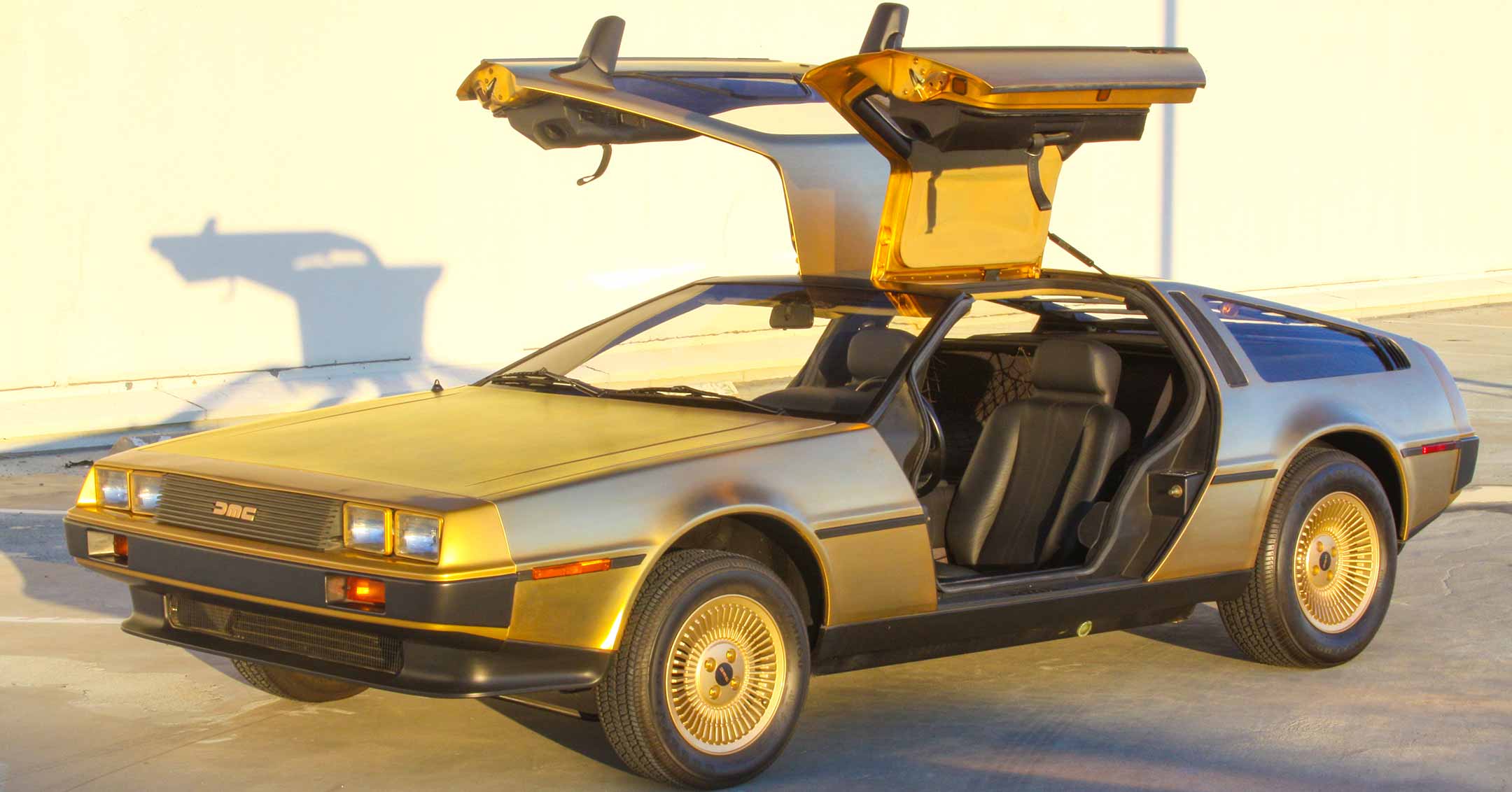
by Barrie Wills, with acknowledgements to Stuart Craven, Nick Sutton‘s book The DeLorean Story, the Sunday Times newspaper, and the DeLorean Motor Company website. In the fall of 1980, John Z. DeLorean was in Dunmurry for one of his ‘in and out’ day visits, and all seemed quiet, as everything at this stage by our standards, seemed to be going reasonably smoothly. Everyone in the company was working flat out. The peace was broken when director of manufacturing George Broomfield, director of engineering administration and quality, Mike Loasby and I were asked to join John Z and managing director Charles K. Bennington in the boardroom. We arrived with hastily written crib sheets, from which we could update the chairman on our respective progress. John Z was at his most convivial when we opened the conference room door and filed in. He went straight to the point and told us the American Express Christmas Mail Order Catalogue had the largest circulation of any across the US. How interesting, I recall thinking. He went on to astonish us all by announcing he had finalized a deal for its front cover to feature a picture of a gold DMC-12. That’s good, we thought. Then came the punchline: ‘ … and inside we will be offering to sell 100 24-carat gold-plated cars at $85,000 each to the first comers.’ We stared at each other in disbelief. It was not as if we hadn’t enough to do, without a side issue of this magnitude to account for. But this was for real, even though New York-based DeLorean PR chief Mike Knepper thought the idea came from John Z’s interior decorator Maur Dubin. John Z was not joking – the deal was done. The cars were to be delivered to the lucky buyers by October 1981. My mind went back to my youth. I had grown up at the bottom of the hill leading to the Daimler factory in Radford, Coventry. I remembered the ‘jungle drums’ doing the rounds when I was about 13. Somehow, we local urchins got to know when the chairman of Daimler’s wife, Lady Norah Docker, was about to appear in her Daimler DK400 Coupe, complete with seats trimmed in natural zebra hide and gold-plated bright body fittings. We would congregate until it passed us. That car’s components were only 14-carat gold. Cheapskate! Once the three of us had left the boardroom, we all agreed no one would be crazy enough to buy one. So we could get on with the job and wait for it to go away. But it didn’t. By the Spring of 1981 we were shocked to learn from John Z that two cars had been ordered – not 100, fortunately. In a way though two were as big a problem as would 100 have been as no-one had a clue whether stainless steel could be gold-plated successfully. We also learned the front and rear fascias and road wheels were to be painted a ‘matching’ gold colour, and that specially-designed exhaust tips manufactured by trusted supplier Prescott Powell, wheel nuts, door hinges, rivets for the door seals, other visual small metal pressings, and the aluminium front DMC logo were required to be gold-plated too. Knowing it had been impossible to match a silver painted fascia with the normal grained stainless steel, an ‘executive decision’ was made to ask the fascia supplier Phoenix to paint three (including a spare set of course) to an acceptable contrast in line with the policy adopted for production cars. A deal was also negotiated with GKN Alloys for the painting of three sets of road wheels to a ‘gold’ colour to compliment the plated skin panels. As the gold-plating of the grade 304 stainless steel was to be the most demanding element of the process, after I consulted with production purchasing manager Nick Sutton in the Coventry office, senior buyer Stuart Craven, the most technically-qualified of the Coventry purchasing team, was given the job of leading the project. He was supported by Len Nelson of quality engineering; Martin Mail, our new product planning manager; and George Fraser of material control manager Martin Graham‘s material handling team. Stuart undertook a review of gold-platers in the UK and mainland Europe, quickly finding out hardly any had the processing equipment capable of plating the size of panels in the DeLorean’s body shell. Very soon he focused his attention on the well-proven plating expertise of the large German chemical conglomerate Degussa. Degussa’s payment terms demanded the gold itself should be paid for up-front. I swallowed hard, conferred with director of finance Joe Daly and financial controller David Adams, and agreed to pay the $45,000 that represented, at the same time as Nick Sutton’s team’s order was placed. Despite their impressive facilities, a larger purpose-built plating vat was required, estimated to cost $37,000. By comparison, the plating process itself represented a meagre $15,000. In view of the number of unknowns relating to the likelihood of success, Degussa went the whole hog and asked for a total (including ancillary costs) of $131,000 up front. All for three sets of panels and door assemblies, one each for the two cars bearing a selling price premium of $60,000 each, and a third in case anything went wrong and if available – as most did – to be held as spares in Irvine, California. The only concession we managed to negotiate was that of a refund for any gold left over in the vat after plating – small mercies – and a chance perhaps to make up for the nett loss (before labour and overhead costs at Dunmurry) of $11,000. As Stuart got deeper into discussions with Degussa, it became clear they were more than sceptical about the likelihood of success. To Stuart’s shock they asked whether the plating could be carried out at Dunmurry to avoid damage to the panels after plating – with them providing the process know-how, the electrolyte solution, specialist platers and other processors. Stuart didn’t bother to
Ecto88
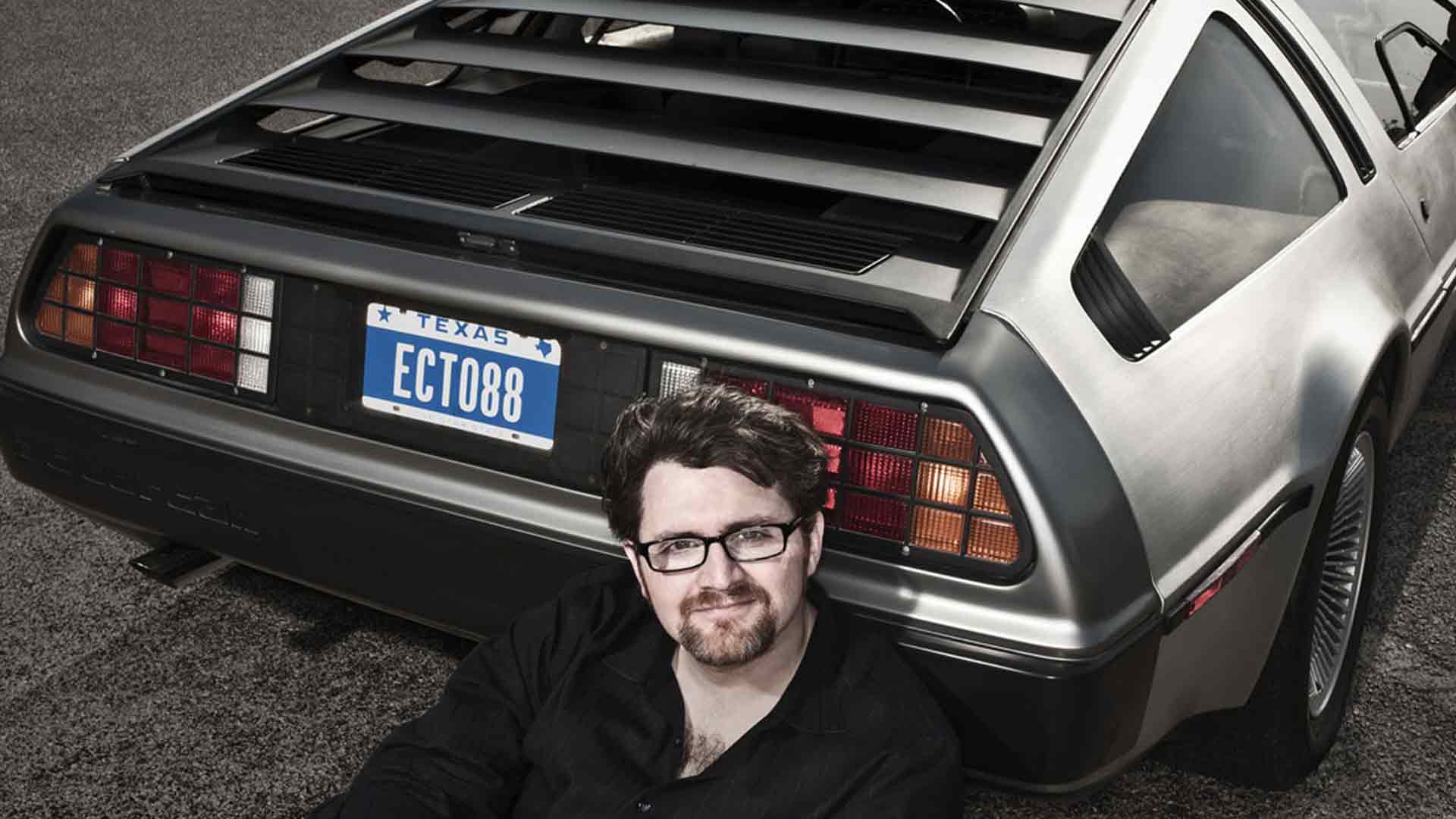
“Ecto 88” is the Ernest Cline‘s name for his hybrid-DeLorean. Ernie created his DeLorean using the DeLorean Time Machine, Buckaroo Banzai’s Rokit 88, The Ghostbuster’s Ecto-1, and Knight Rider’s K.I.T.T for inspiration. Articles: Ecto88: Ernie Cline’s ultimate Eighties geekmobile | Hemmings Daily
DeLorean Proto-1
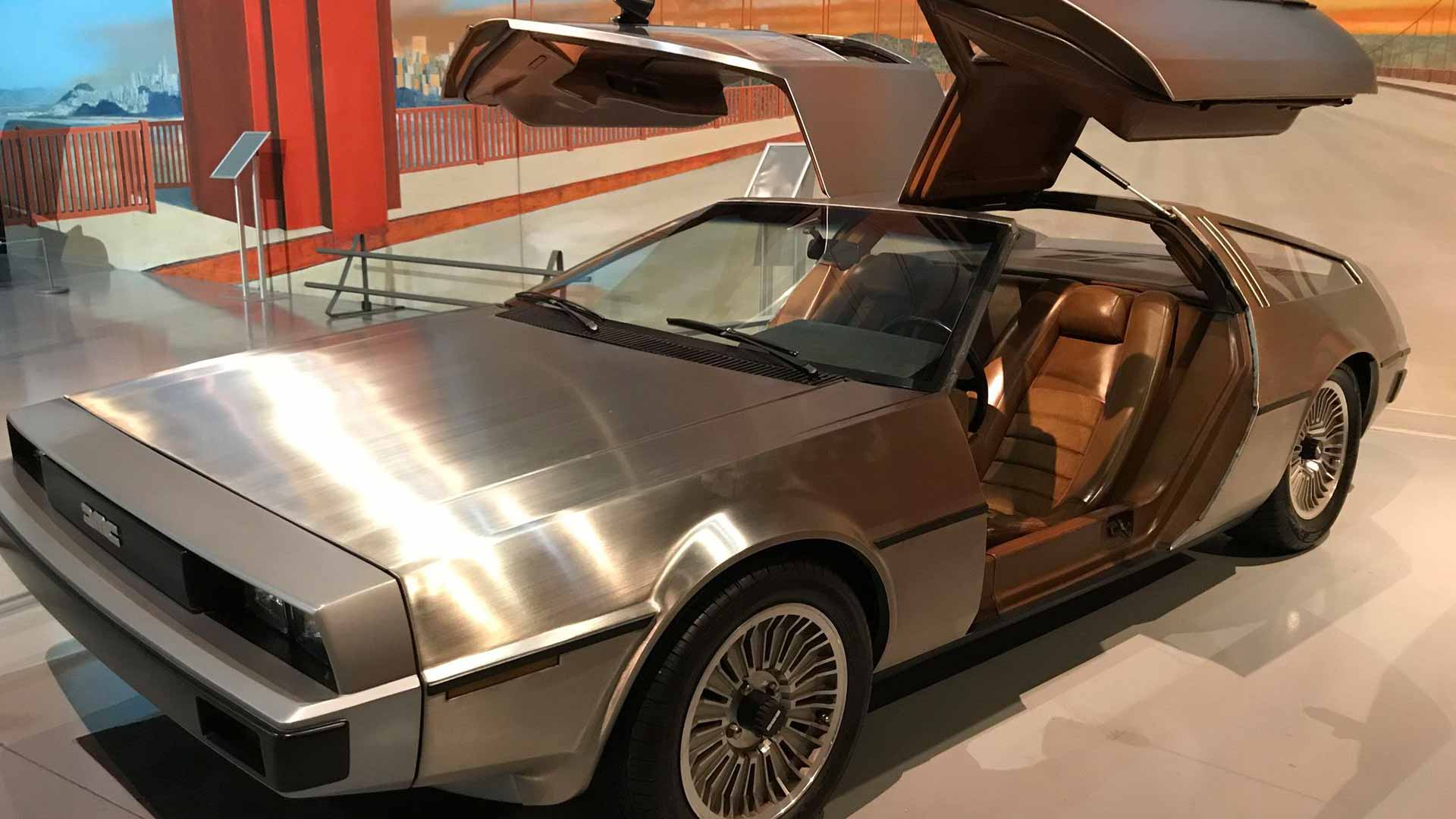
The 1976 DeLorean Prototype #1, “Proto 1” was the first road-worthy DeLorean built, used to sell John DeLorean’s dream of an “ethical sports car.” The exterior and interior design was created by Giorgetto Giugiaro’s design team and Bill Collin’s engineering team. The exterior of Proto 1 looks similar to production DeLoreans, but a keen eye (or dedicated DeLorean owner,) can easily see the differences. Not only Giugiaro update his original styling between prototyping and production, but engineering challenges and costs brought significant changes to the production line version of the cars. There are many photos of JZD with Proto-1, as it was a great tool for getting investors for the company. It was also put on display all around the United States in the late 1970s, which gave reporters many opportunities for photos of this unique automobile. Some things Proto-1 has (or was advertised to have,) that production cars did not get are: In 2014 Cliff Schmucker sold Proto-1 to Tony Ierardi, after it had recently been restored, including stainless steel regraining by Chris Nicholson. Prior to its sale, it had been kept in a climate-controlled building for several years prior.
DeLorean Time Machine
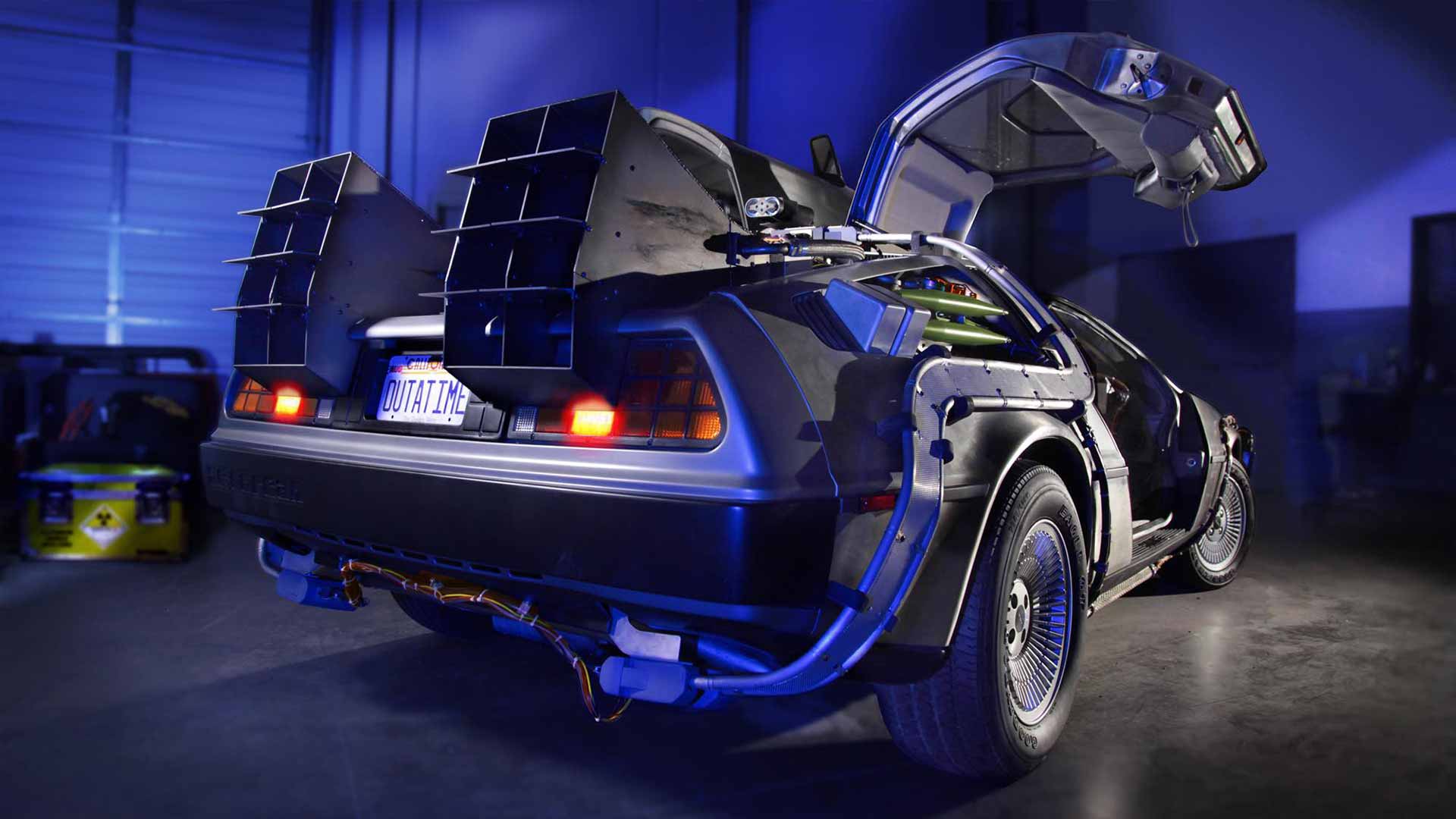
The DeLorean Time Machine from Back to the Future (1985)…